

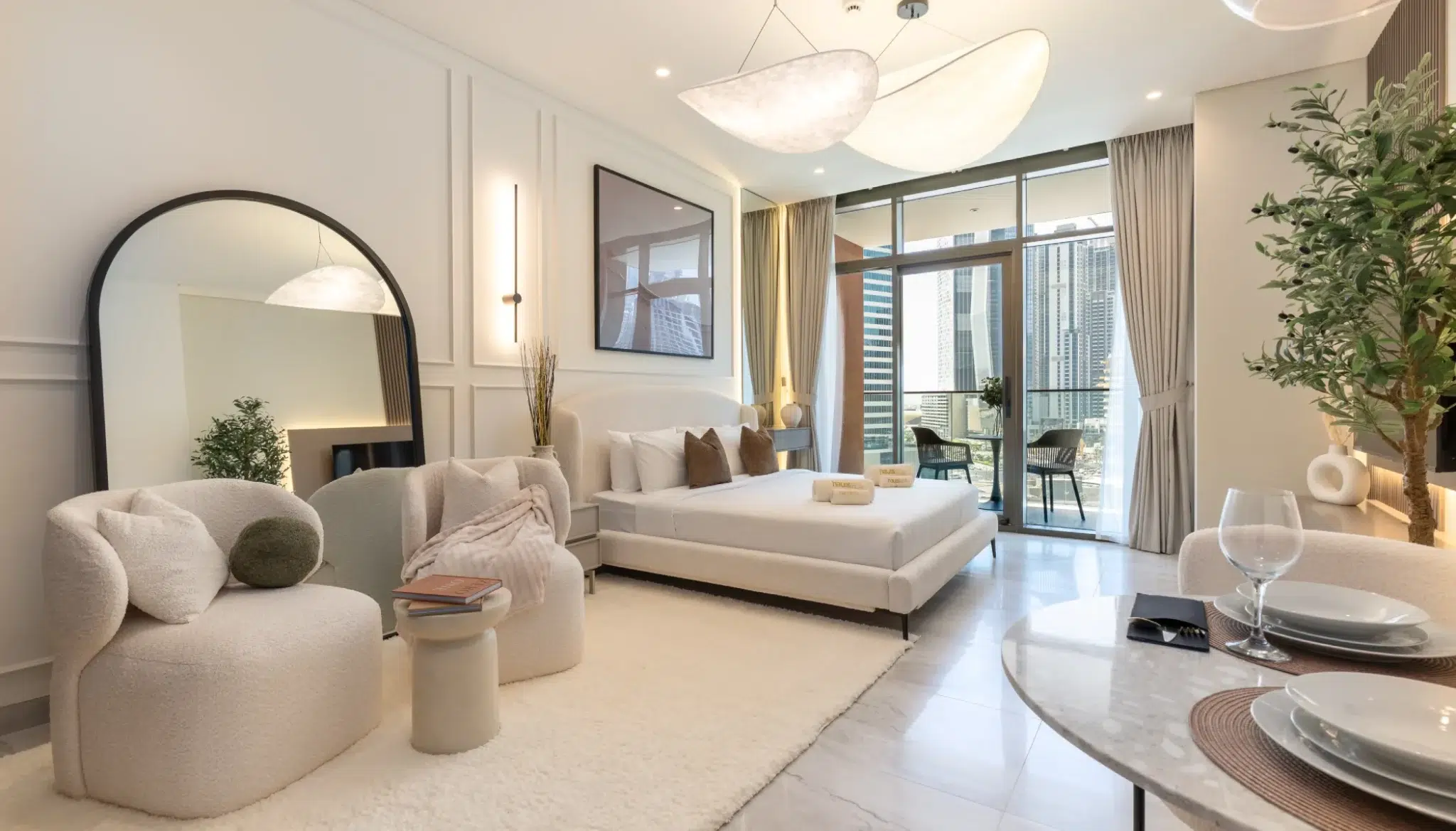
In Dubai’s short-term rental market, design is not just about how a property looks. It directly influences how it performs.
Guests are comparing multiple listings at once, often within seconds. They are not just choosing a location or price point; they are choosing a space that feels right for their stay. This means design plays a central role in whether a property attracts attention, converts interest into bookings and delivers strong reviews over time.
For landlords, this changes how a holiday home should be approached. Furnishing a property is no longer a one-time decision. It is part of a broader performance strategy that impacts visibility, occupancy and long-term returns.
Primary CTA: Speak to an expert and unlock the full potential of your Dubai property.
Designing for Bookings, Not Just Appearance
A common mistake is treating design as a purely aesthetic exercise. While visual appeal is important, high-performing holiday homes are designed with a clear purpose. Every element is chosen to support bookings and guest satisfaction.
This means understanding how guests interact with a space, what they expect from their stay and how design influences their decision-making. A property that looks visually appealing but feels impractical or inconsistent will struggle to maintain strong reviews and repeat bookings.
Design, in this context, becomes functional. It needs to balance style with usability, and aesthetics with durability. The goal is not just to impress, but to perform consistently across different types of guests and stay durations.
First Impressions Influence Clicks and Conversions
In a platform-driven market, the first impression happens before a guest even steps into the property. It happens on a screen. Listings are judged quickly. Guests scroll through options and make decisions based on imagery, layout and perceived quality. A property that stands out visually is far more likely to be clicked on, shortlisted and ultimately booked.
High-performing properties are designed with this in mind. They prioritise clear layouts, strong natural light, cohesive styling and a sense of space and comfort. These elements are not accidental. They are intentional choices that improve how a property is perceived online and how it performs in search results.
Designing for the Dubai Market
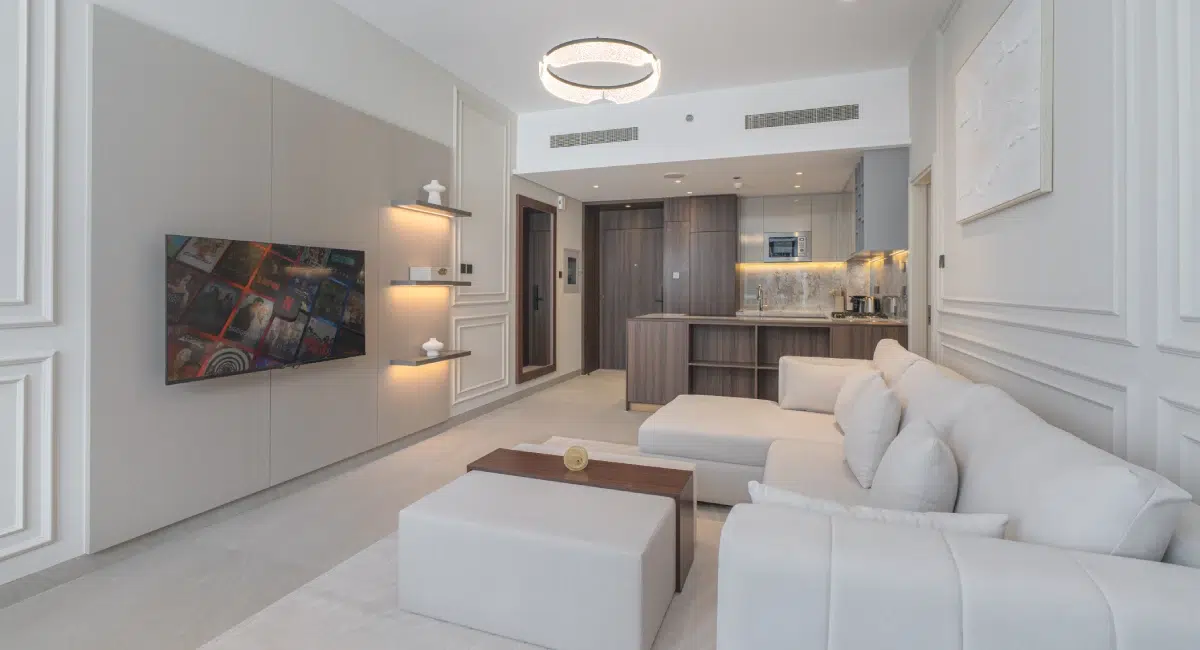
Dubai has a distinct standard when it comes to interiors and living environments. Guests expect properties to feel modern, well-maintained and comparable to high-quality serviced apartments or hotels. Designing for this market means aligning with those expectations rather than personal preference. Neutral tones, contemporary furniture and clean finishes tend to perform better because they appeal to a wider audience.
Properties that feel overly personalised, dated or inconsistent can limit their own reach. While they may suit individual taste, they are less likely to resonate with a broad range of guests. Designing for performance requires stepping back from personal style and focusing on what the market responds to.
Furniture and Setup as a Performance Strategy
Furniture selection is often underestimated, but it has a direct impact on both perception and usability. A well-furnished property creates a sense of cohesion, comfort and quality. It also photographs better, which improves listing performance. In contrast, inconsistent or low-quality furniture can make a property feel disjointed and reduce its perceived value.
Furnishing for short-term rental performance requires a different approach to furnishing a personal home. It involves selecting pieces that are durable, visually appealing and suited to a wide range of guests.
As seen with services like Designhaus Collection, the focus is on creating spaces that are designed to perform, not just to look good. This includes considering layout, flow, functionality and guest expectations from the outset.
Layout and Functionality Shape the Guest Experience
Beyond visual appeal, layout and functionality play a critical role in how a property performs over time. Guests are not only looking for a space that looks good, but one that works well for their needs. This becomes even more important for longer stays, business travellers and relocating tenants who require a more practical living environment.
Key functional elements include comfortable seating, practical kitchen setups, dedicated workspace areas and sufficient storage.
When these elements are missing or poorly executed, it impacts the overall experience, which in turn affects reviews and repeat bookings. A high-performing holiday home feels easy to live in, and that ease translates directly into stronger guest satisfaction.
Holiday Home Furniture Solutions
Furniture solutions for the Dubai market requires a balance of comfort, durability and broad guest appeal. Interiors should feel modern, well-maintained and consistent with the standard guests often expect from serviced apartments and hotels.
Overly personalised, dated or mismatched furniture can make a property feel less competitive. A more effective approach is to choose pieces that suit the function of the space, withstand frequent use and create a polished environment for short term stays. Experts, like Designhaus, specialise in creating timeless interiors that balance this perfectly, and the investment in expert services offsets the loss rentals from poor furnishing choices.
Photography Translates Design Into Bookings
Design alone does not drive performance if it is not presented effectively. Photography is the bridge between the physical space and the guest’s perception of it. High-quality images highlight the strengths of a property, create a sense of trust and encourage bookings.
Professional photography captures light, layout and key design features in a way that supports conversion. Poor photography, on the other hand, can undermine even well-designed properties by making them appear less appealing than they actually are.
Designing for Long-Term Performance, Not Just Launch
Another common mistake is treating design as a one-time investment. In reality, maintaining performance requires ongoing attention. Guest expectations evolve, trends change and wear and tear can affect how a property is perceived over time.
High-performing properties are reviewed periodically and updated where needed, whether through refreshed styling, updated furniture or layout improvements. Design should be approached as part of an ongoing performance strategy, not just an initial setup.
Why Design Alone Is Not Enough
While design plays a critical role, it is only one part of a larger system. A well-designed property still requires strong pricing, consistent guest experience and active management to perform effectively. Without this, even the most visually appealing property can fall short of its potential.
The highest-performing holiday homes combine strong design, effective pricing, reliable guest experience and continuous optimisation.
Frequently Asked Questions
Does design really impact bookings for holiday homes in Dubai?
Yes. Design influences first impressions, click-through rates and overall guest perception. Properties that are well-designed and professionally presented are more likely to attract bookings and achieve stronger reviews. Over time, this also improves visibility on booking platforms and allows properties to remain competitive in both occupancy and pricing.
What type of interiors perform best in Dubai?
Modern, neutral and well-maintained interiors tend to perform best. They appeal to a wide audience and align with the expectations of guests visiting or living in Dubai. Clean layouts, consistent styling and a hotel-like finish help create a sense of comfort and quality that supports stronger booking decisions.
Is it worth investing in furniture for a holiday home?
Yes. Furniture directly affects both visual appeal and functionality. Well-chosen furniture improves how a property looks in photos and how it performs during a stay, which leads to better reviews, stronger occupancy and improved pricing potential. Poor or mismatched furniture can have the opposite effect, reducing perceived value.
Can I use my own style when furnishing a holiday home?
It is possible, but designing for a broad audience is generally more effective. Neutral, coordinated interiors tend to perform better than highly personalised spaces, as they appeal to a wider range of guests. A balanced approach works best, where subtle personalised styling adds character without limiting overall guest appeal.
How often should I update the design of my property?
A well-considered setup, aligned with guest expectations and market demand, significantly reduces the need for frequent updates later on. Getting the design, layout and furnishing choices right from the start helps maintain long-term appeal, supports consistent booking performance, and keeps the property competitive without the need for regular re-designs.
Speak to a Dubai Holiday Home Expert
Designing a high-performing holiday home requires more than selecting furniture or choosing a colour scheme. It requires a clear understanding of what drives bookings, how guests interact with a space and how to position a property within a competitive market.
haus & haus Holidays is an all‑in‑one solution, managing everything under one roof—from property styling through the Designhaus Collection, to personal guest check‑ins, combined with pricing strategy, listing optimisation and full-service management, we ensure every element of the property contributes to stronger occupancy and long-term returns.
Whether you are setting up a new holiday home or looking to improve an existing one, our team can help you create a space that not only looks the part but delivers consistent results.